SOFT – Web Platform for Digital Soil Mapping and Analysis

Web Platform for Digital Soil Mapping and Analysis

Looking for a similar project?

Project Details

The client needed a tool to centralize and visualize soil information gathered from research sites, remote sensing, and predictive soil models. The challenge was to display soil data not just by location, but also by depth layers (e.g., 0–5 cm, 5–15 cm), with support for interactive querying and downloadable data outputs.


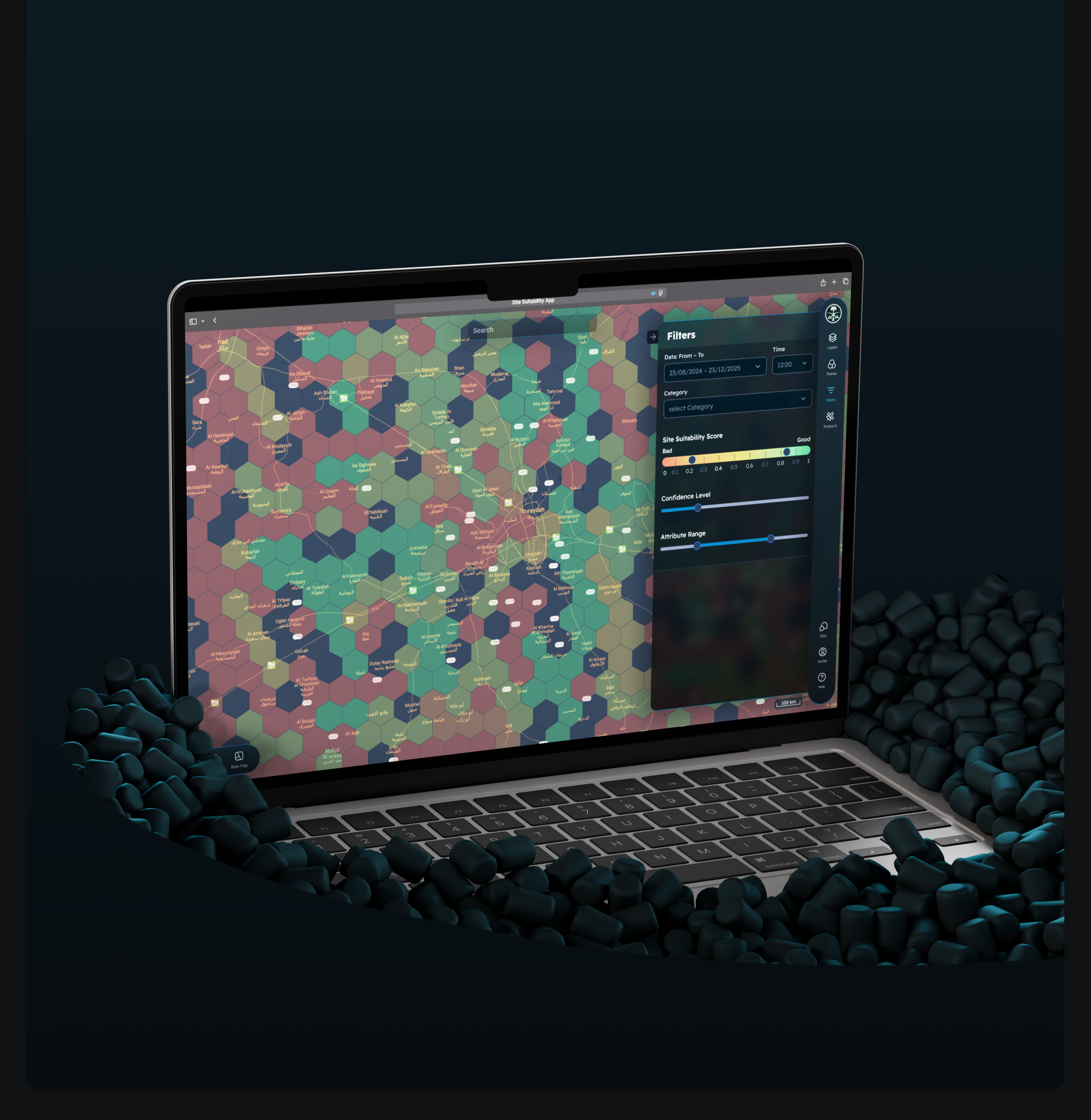
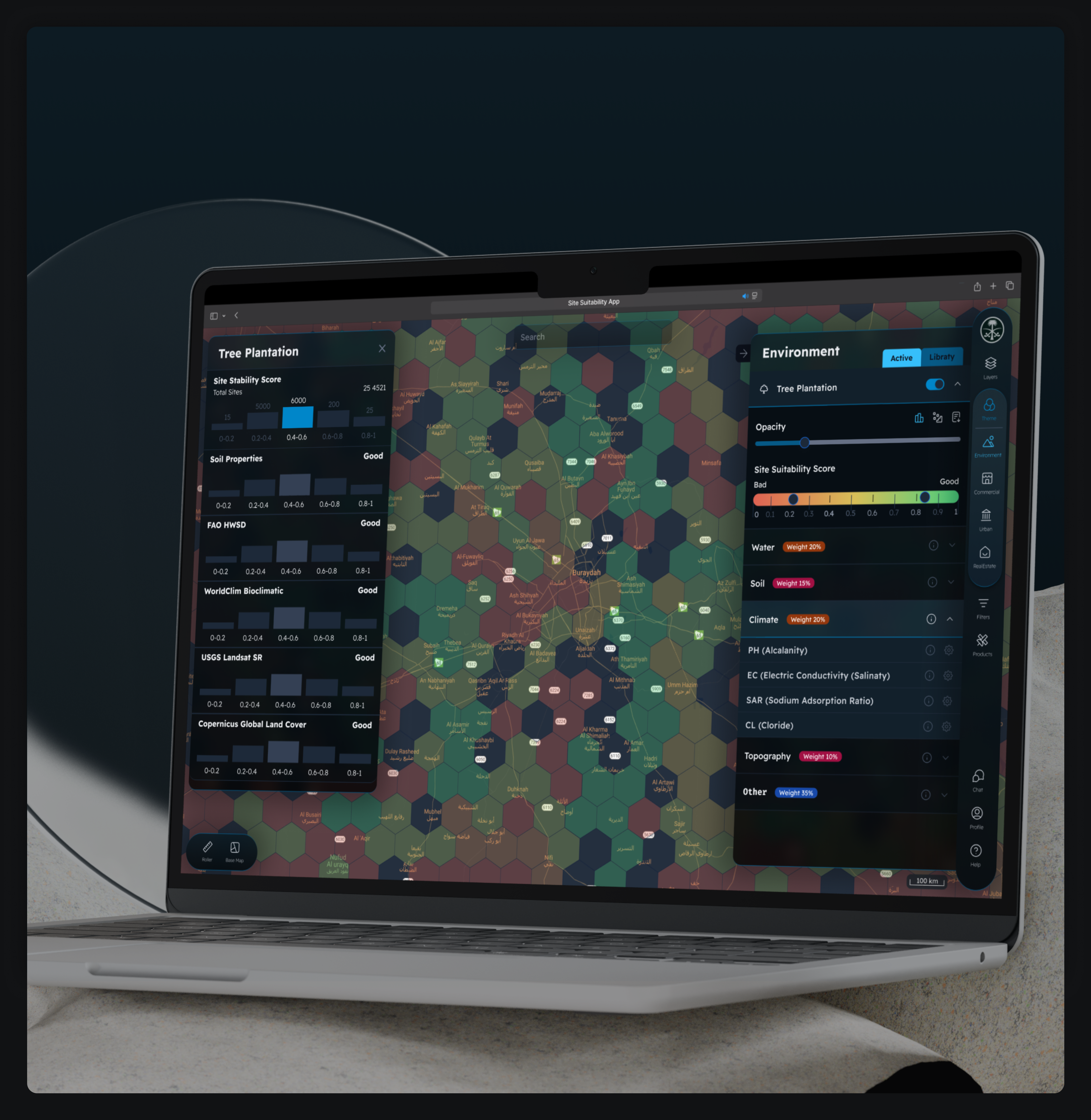
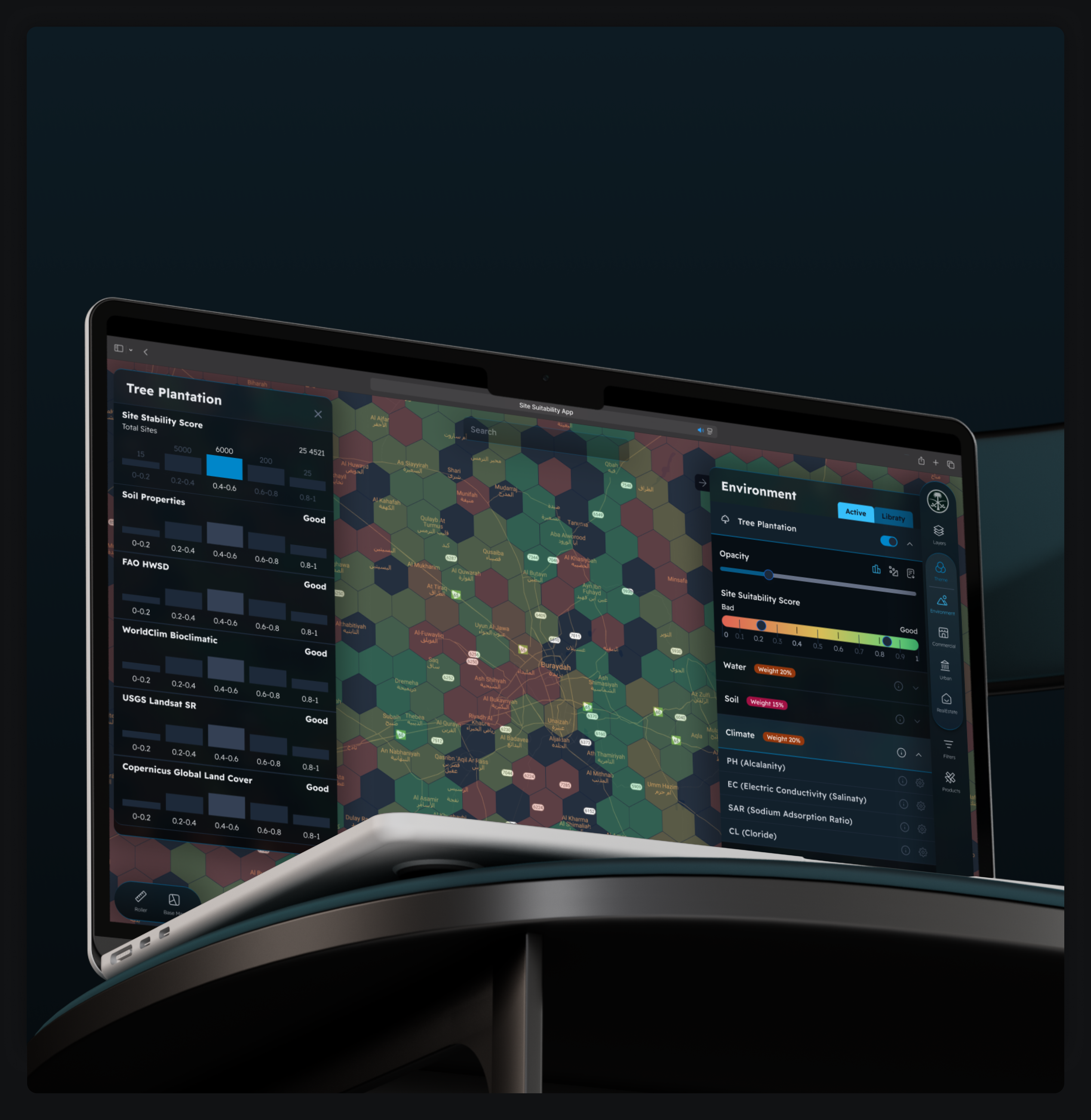
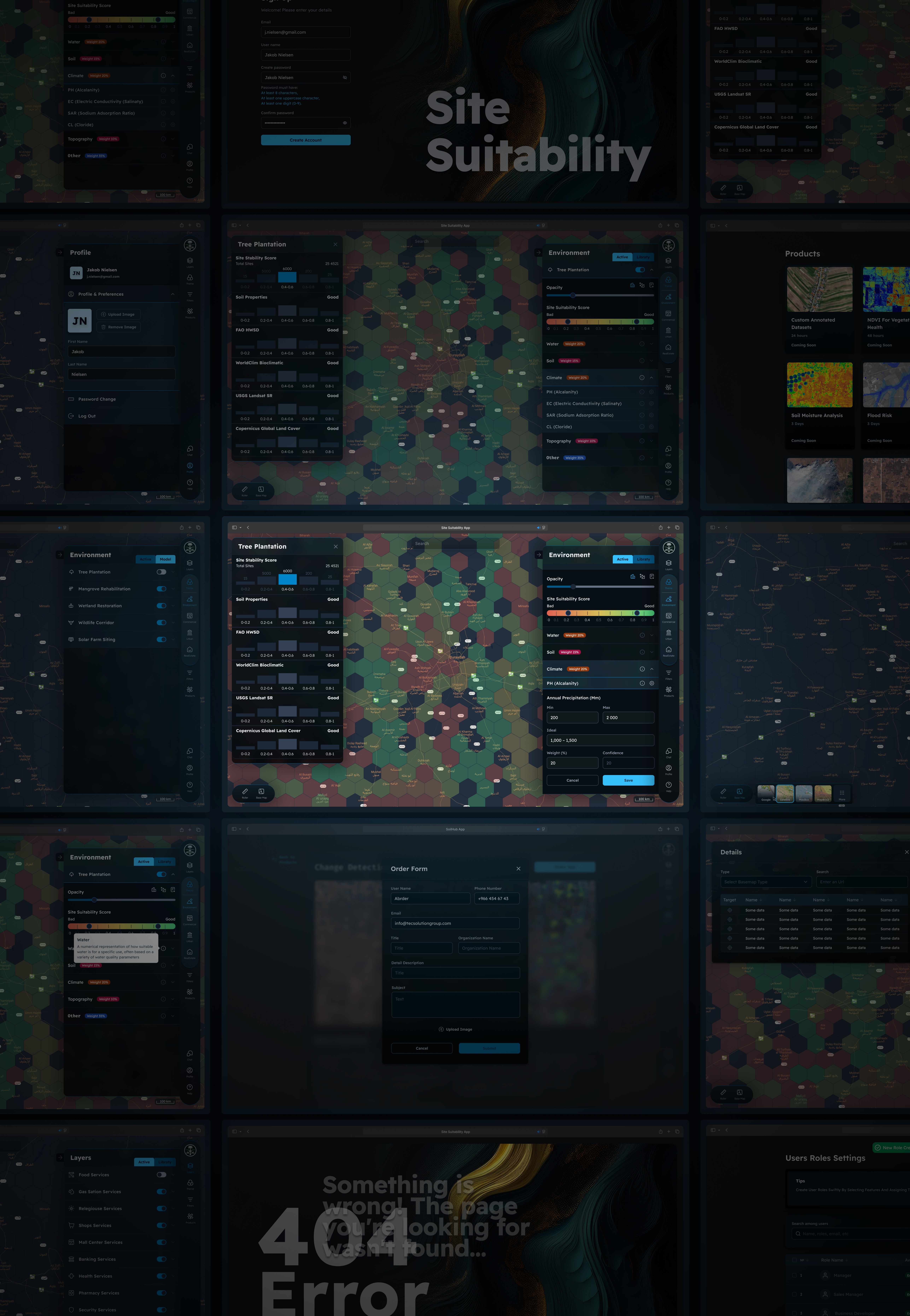
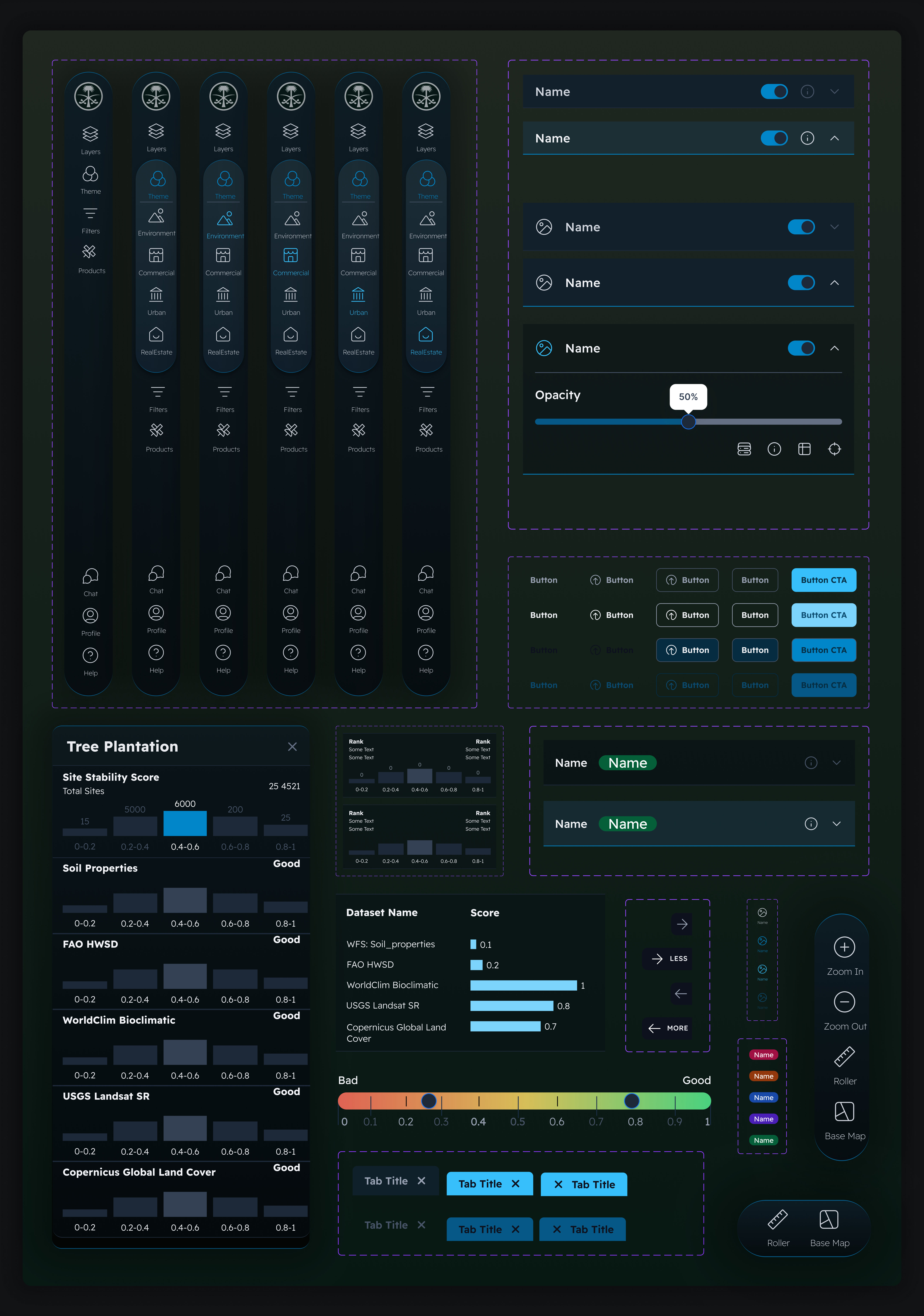
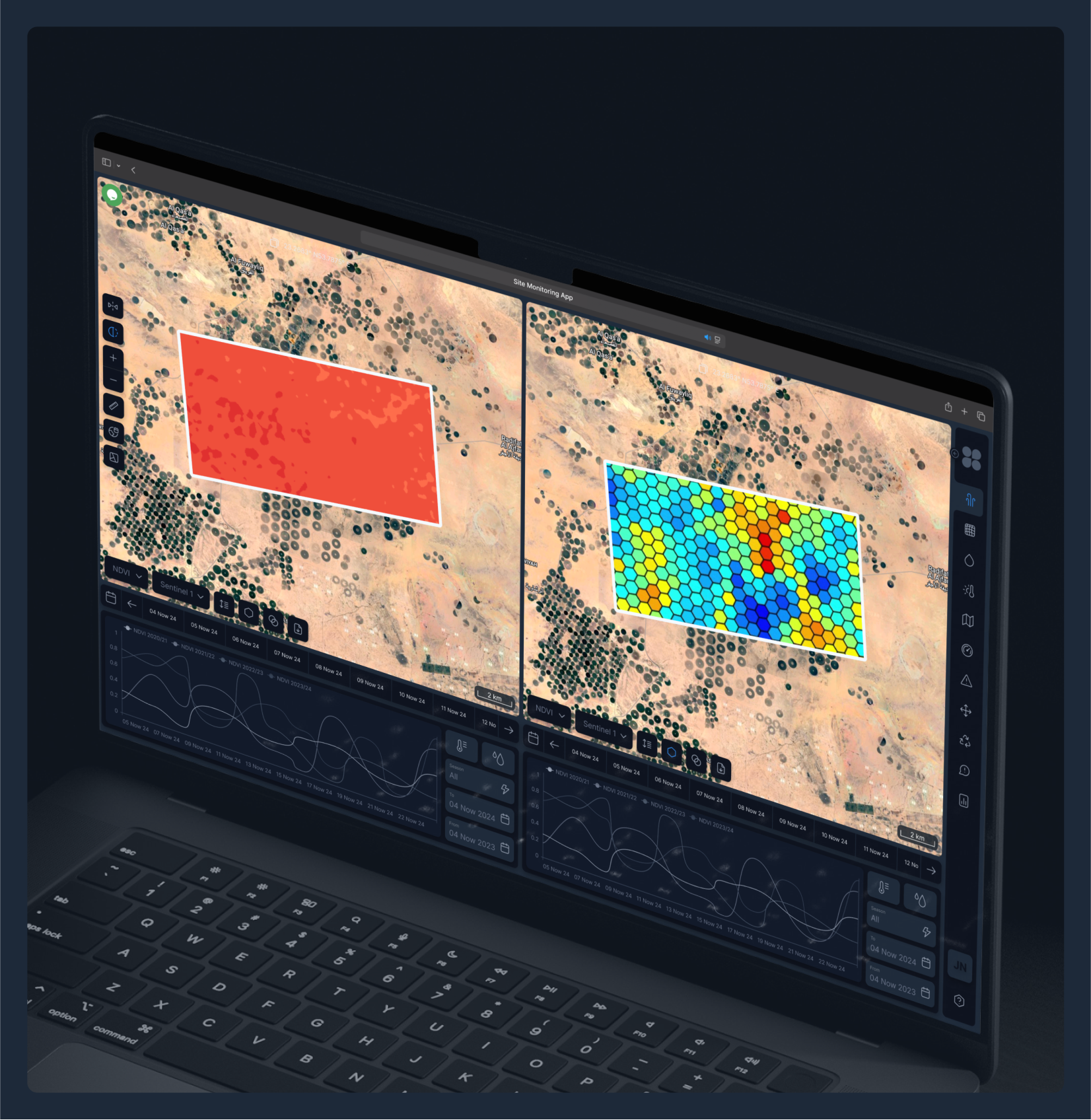
We built a responsive, map-driven web app featuring a hexagon grid overlay, where each hex represents a geographic unit enriched with soil properties such as pH, organic carbon, texture, and moisture. Users can select a hex and a depth layer to explore corresponding charts, visualize soil property distributions, and compare layers over time.


A comprehensive admin panel enables backend management of soil datasets, metadata, and UI content. The system enables rapid updates to map layers and dataset models.

Client: Agricultural Research and Development Organization

Sector: Precision Agriculture

Sub Sector: Digital Soil Mapping and Environmental Monitoring

Services:

  • Custom GIS web application development
  • Interactive map visualization
  • Depth-based soil data modeling
  • Admin panel and data management
  • Integration with global soil databases

Solution:
SoilHub is a web-based system designed to support the agricultural industry in visualizing, analyzing, and managing digital soil data. It offers users a depth-sensitive, hexagon-based mapping experience, with soil property graphs, search tools, and robust data management features.

Location: Saudi Arabia

People:
The team comprised software developers, remote sensing specialists, and cloud engineers. The project manager led the agile development cycle, ensuring client requirements were met through iterative delivery. The backend team used .NET Core and the ABP Framework to handle data processing and user management, while the frontend team delivered an interactive experience using Angular. Our DevOps specialists ensured cloud infrastructure scalability and performance.

Technology and Software:

  • Database: PostgreSQL;
  • Cloud services: AWS (EC2, S3);
  • Front-end: Angular;
  • Back-end: .NET Core with ABP Framework;
  • Elasticsearch.

Process & Challenges

Process:

  • Discovery phase with domain experts to define soil data model and depth segmentation;
  • Map integration using Leaflet and a custom hexagonal tiling engine;
  • Backend service development for soil property data serving and caching;
  • Admin panel with secure user authentication and dataset CRUD functionality;
  • Data visualization for per-depth soil property charts;
  • Testing with sample datasets across various scales and depth levels;
  • Deployment in a cloud environment with scalability in mind.

Challenges:

  • Depth-Aware Visualization: Mapping soil properties that vary vertically, not just geographically.
  • Data Volume and Aggregation: Efficiently serving high-resolution soil maps while maintaining performance.
  • Flexible Dataset Management: Allowing non-technical admins to upload and manage layered soil data across multiple formats.

Result

SoilHub provides a centralized solution for digital soil mapping, delivering spatial and vertical insights into soil properties through an intuitive and powerful interface. It supports researchers, agronomists, and policymakers in assessing land suitability, monitoring degradation, and guiding sustainable land management practices.

Our Team

Ievgen Lavrishko
CEO & Owner
Khrystyna Bochko
HR Generalist
Alevtyna Kostianchuk
Senior Project Manager
Andriiana Pavlyshyn
Head of Business Development
Roman Nahaiovskyi
Project Manager
Maria Kizim
Lead Generation Specialist
Ivanna Soltys
Tender Manager

Navigating Our Impressive SOFT Portfolio

  • Development software for a soil subsidence

    Development software for a soil subsidence
  • Tracking system for public transport

    The system is designed to comprehensively address the issues of public passenger transport
  • Software for bus forecasting tables

    Develop software for public transport which display on tables arrival information about bus, tram and trolleybus.
  • Development of a Satellite Images Sales Platform 

    A portal for the sale of satellite images
  • Oil and gas software products

    Software Development for the energy industry to control and track of logistics, drilling, mining.

Working on the Project:
A Step-by-Step Journey to Success

01

PREPARATION

You give us a pilot project – set us a
task, provide samples, templates,
instructions.
02

PILOT PROJECT

We carry out this pilot project
for FREE, according to all your
instructions.
03

AGREEMENT

You evaluate our work, we agree on
the cost of further work.
04

LET’S STARTED!

We sign a cooperation agreement and
NDA, after which our team gets to
work.

Have a similar project?

Contact us, we’ll help with its implementation.

    United Kingdom

    Devonshire str., 41, Ground Floor, London W1G 7AJ, UK

    Estonia

    Harju maakond, Tallinn, Kesklinna linnaosa, Kaupmehe tn 7-120, 10114, Estonia

    Ukraine

    Ukraine, Lviv, Sadova street, 2a/1
    +380672088520 Ievgen Lavrishko
info@gis-point.com
    SOFT – Development of a Web-Based 3D Point Cloud Visualization Platform

    Web Platform for Digital Soil Mapping and Analysis

    Looking for a similar project?

    Project Details

    The client needed a tool to centralize and visualize soil information gathered from research sites, remote sensing, and predictive soil models. The challenge was to display soil data not just by location, but also by depth layers (e.g., 0–5 cm, 5–15 cm), with support for interactive querying and downloadable data outputs.


    We built a responsive, map-driven web app featuring a hexagon grid overlay, where each hex represents a geographic unit enriched with soil properties such as pH, organic carbon, texture, and moisture. Users can select a hex and a depth layer to explore corresponding charts, visualize soil property distributions, and compare layers over time.


    A comprehensive admin panel enables backend management of soil datasets, metadata, and UI content. The system enables rapid updates to map layers and dataset models.

    Client: Agricultural Research and Development Organization

    Sector: Precision Agriculture

    Sub Sector: Digital Soil Mapping and Environmental Monitoring

    Services:

    • Custom GIS web application development
    • Interactive map visualization
    • Depth-based soil data modeling
    • Admin panel and data management
    • Integration with global soil databases

    Solution:
    SoilHub is a web-based system designed to support the agricultural industry in visualizing, analyzing, and managing digital soil data. It offers users a depth-sensitive, hexagon-based mapping experience, with soil property graphs, search tools, and robust data management features.

    Location: Saudi Arabia

    People:
    The team comprised software developers, remote sensing specialists, and cloud engineers. The project manager led the agile development cycle, ensuring client requirements were met through iterative delivery. The backend team used .NET Core and the ABP Framework to handle data processing and user management, while the frontend team delivered an interactive experience using Angular. Our DevOps specialists ensured cloud infrastructure scalability and performance.

    Technology and Software:

    • Database: PostgreSQL;
    • Cloud services: AWS (EC2, S3);
    • Front-end: Angular;
    • Back-end: .NET Core with ABP Framework;
    • Elasticsearch.

    Process & Challenges

    Process:

    • Discovery phase with domain experts to define soil data model and depth segmentation;
    • Map integration using Leaflet and a custom hexagonal tiling engine;
    • Backend service development for soil property data serving and caching;
    • Admin panel with secure user authentication and dataset CRUD functionality;
    • Data visualization for per-depth soil property charts;
    • Testing with sample datasets across various scales and depth levels;
    • Deployment in a cloud environment with scalability in mind.

    Challenges:

    • Depth-Aware Visualization: Mapping soil properties that vary vertically, not just geographically.
    • Data Volume and Aggregation: Efficiently serving high-resolution soil maps while maintaining performance.
    • Flexible Dataset Management: Allowing non-technical admins to upload and manage layered soil data across multiple formats.

    Result

    SoilHub provides a centralized solution for digital soil mapping, delivering spatial and vertical insights into soil properties through an intuitive and powerful interface. It supports researchers, agronomists, and policymakers in assessing land suitability, monitoring degradation, and guiding sustainable land management practices.

    Our Team

    Ievgen Lavrishko
    CEO & Owner
    Khrystyna Bochko
    HR Generalist
    Alevtyna Kostianchuk
    Senior Project Manager
    Andriiana Pavlyshyn
    Head of Business Development
    Roman Nahaiovskyi
    Project Manager
    Maria Kizim
    Lead Generation Specialist
    Ivanna Soltys
    Tender Manager

    Navigating Our Impressive SOFT Portfolio

    • Development software for a soil subsidence

      Development software for a soil subsidence
    • Tracking system for public transport

      The system is designed to comprehensively address the issues of public passenger transport
    • Software for bus forecasting tables

      Develop software for public transport which display on tables arrival information about bus, tram and trolleybus.
    • Development of a Satellite Images Sales Platform 

      A portal for the sale of satellite images
    • Oil and gas software products

      Software Development for the energy industry to control and track of logistics, drilling, mining.

    Working on the Project:
    A Step-by-Step Journey to Success

    01

    PREPARATION

    You give us a pilot project – set us a
    task, provide samples, templates,
    instructions.
    02

    PILOT PROJECT

    We carry out this pilot project
    for FREE, according to all your
    instructions.
    03

    AGREEMENT

    You evaluate our work, we agree on
    the cost of further work.
    04

    LET’S STARTED!

    We sign a cooperation agreement and
    NDA, after which our team gets to
    work.

    Have a similar project?

    Contact us, we’ll help with its implementation.

      United Kingdom

      Devonshire str., 41, Ground Floor, London W1G 7AJ, UK

      Estonia

      Harju maakond, Tallinn, Kesklinna linnaosa, Kaupmehe tn 7-120, 10114, Estonia

      Ukraine

      Ukraine, Lviv, Sadova street, 2a/1
      +380672088520 Ievgen Lavrishko
info@gis-point.com
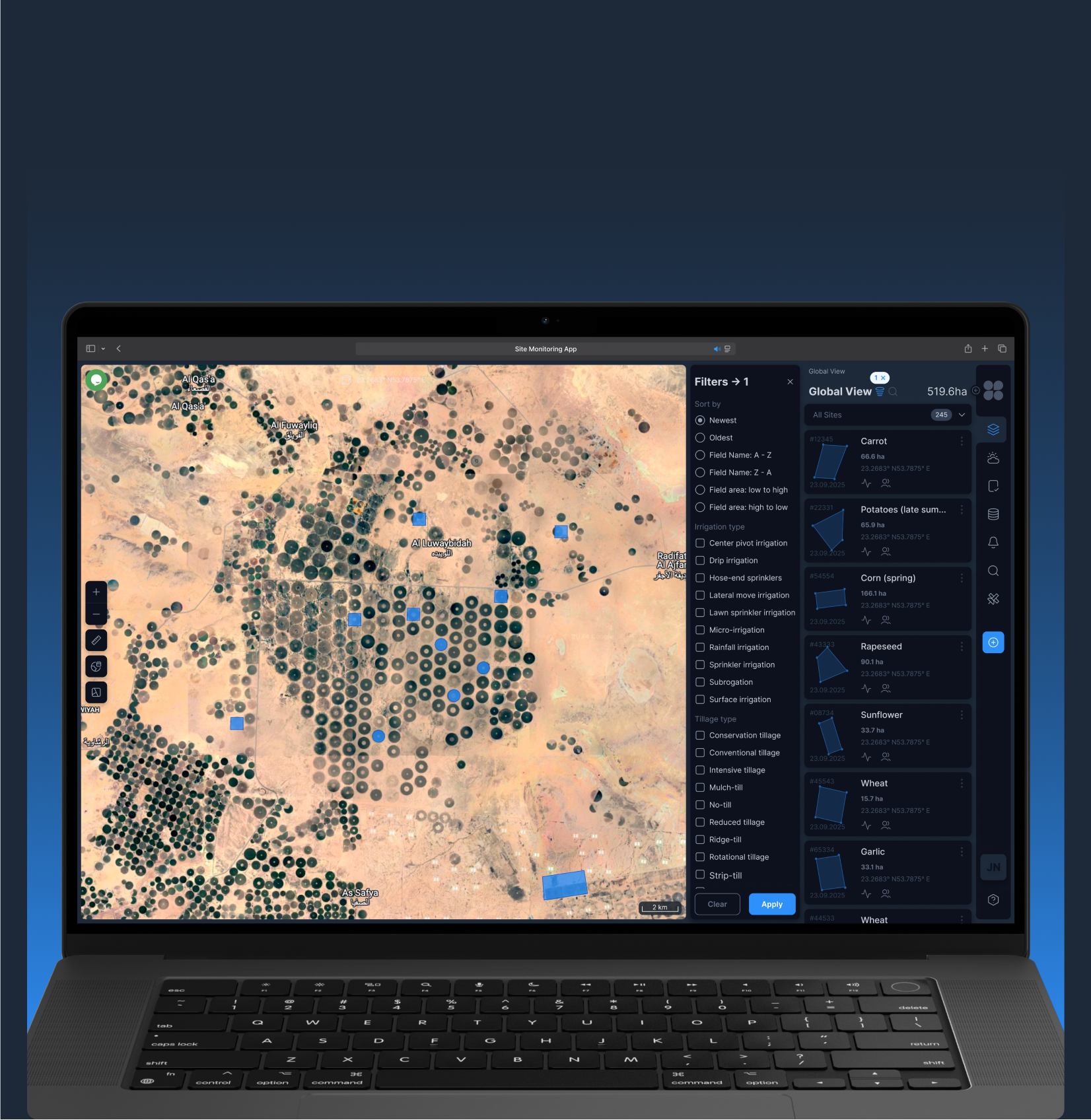
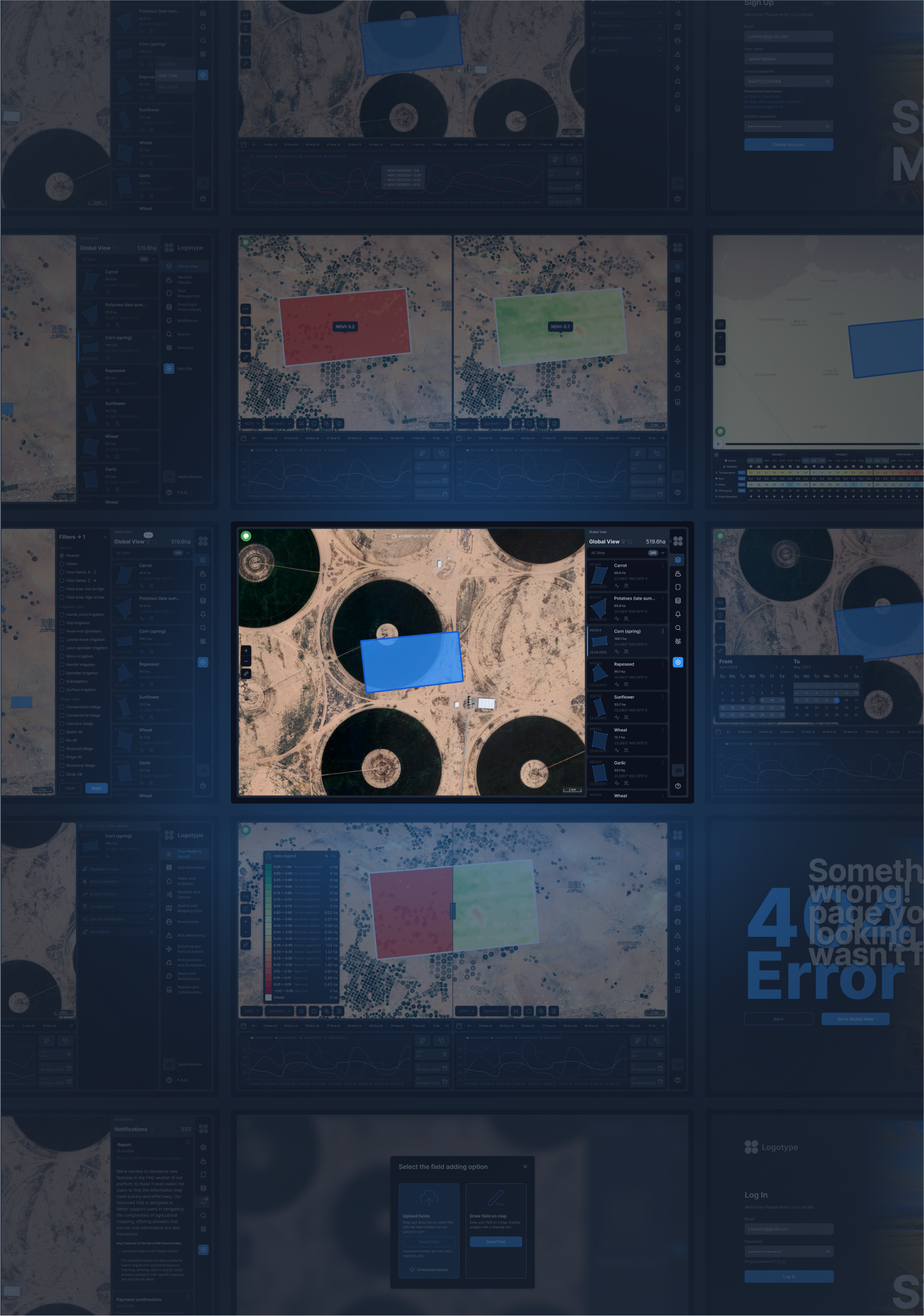
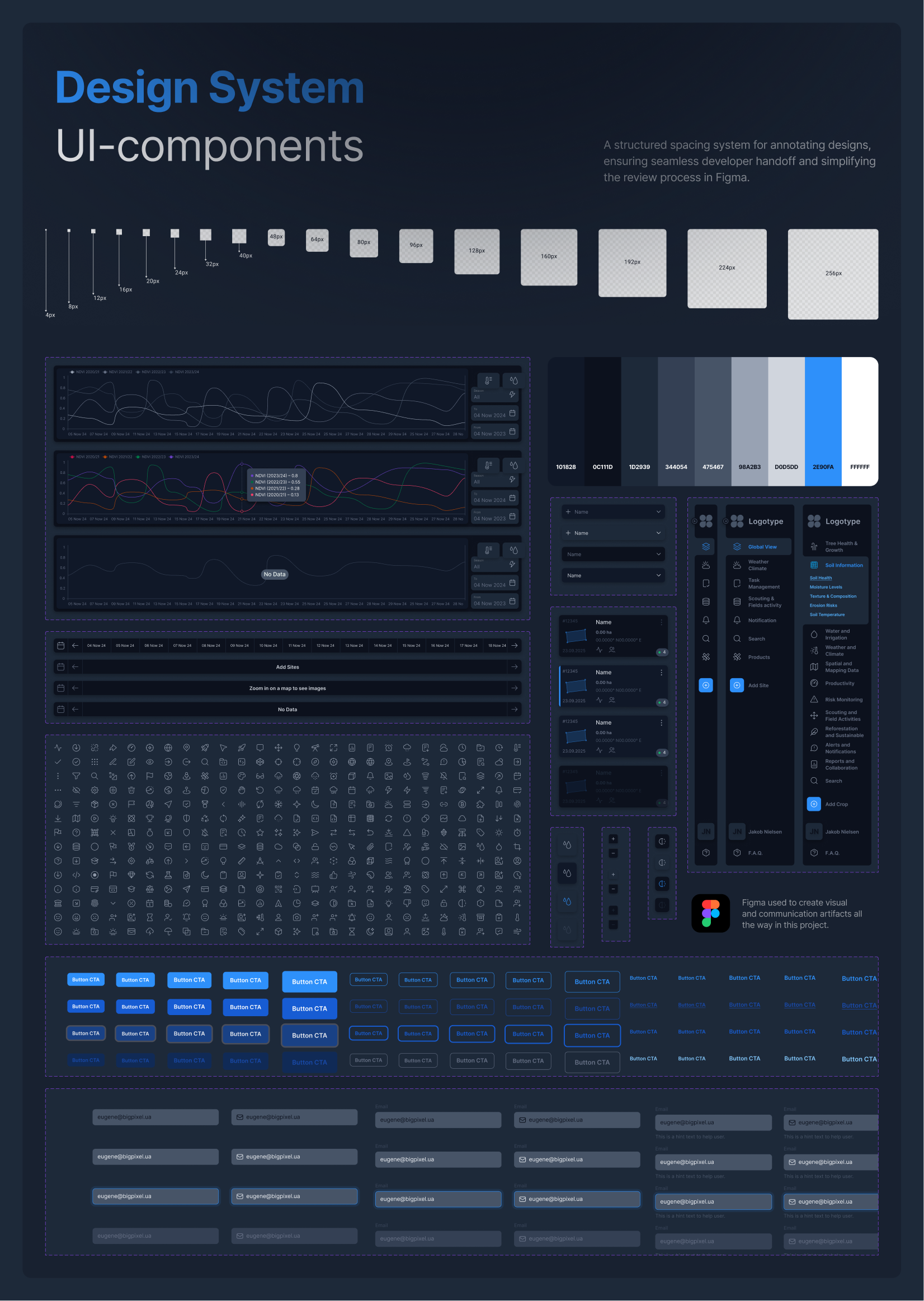
      SOFT – Development of a Precision Agriculture Site Monitoring Platform

      Web Platform for Digital Soil Mapping and Analysis

      Looking for a similar project?

      Project Details

      The client needed a tool to centralize and visualize soil information gathered from research sites, remote sensing, and predictive soil models. The challenge was to display soil data not just by location, but also by depth layers (e.g., 0–5 cm, 5–15 cm), with support for interactive querying and downloadable data outputs.


      We built a responsive, map-driven web app featuring a hexagon grid overlay, where each hex represents a geographic unit enriched with soil properties such as pH, organic carbon, texture, and moisture. Users can select a hex and a depth layer to explore corresponding charts, visualize soil property distributions, and compare layers over time.


      A comprehensive admin panel enables backend management of soil datasets, metadata, and UI content. The system enables rapid updates to map layers and dataset models.

      Client: Agricultural Research and Development Organization

      Sector: Precision Agriculture

      Sub Sector: Digital Soil Mapping and Environmental Monitoring

      Services:

      • Custom GIS web application development
      • Interactive map visualization
      • Depth-based soil data modeling
      • Admin panel and data management
      • Integration with global soil databases

      Solution:
      SoilHub is a web-based system designed to support the agricultural industry in visualizing, analyzing, and managing digital soil data. It offers users a depth-sensitive, hexagon-based mapping experience, with soil property graphs, search tools, and robust data management features.

      Location: Saudi Arabia

      People:
      The team comprised software developers, remote sensing specialists, and cloud engineers. The project manager led the agile development cycle, ensuring client requirements were met through iterative delivery. The backend team used .NET Core and the ABP Framework to handle data processing and user management, while the frontend team delivered an interactive experience using Angular. Our DevOps specialists ensured cloud infrastructure scalability and performance.

      Technology and Software:

      • Database: PostgreSQL;
      • Cloud services: AWS (EC2, S3);
      • Front-end: Angular;
      • Back-end: .NET Core with ABP Framework;
      • Elasticsearch.

      Process & Challenges

      Process:

      • Discovery phase with domain experts to define soil data model and depth segmentation;
      • Map integration using Leaflet and a custom hexagonal tiling engine;
      • Backend service development for soil property data serving and caching;
      • Admin panel with secure user authentication and dataset CRUD functionality;
      • Data visualization for per-depth soil property charts;
      • Testing with sample datasets across various scales and depth levels;
      • Deployment in a cloud environment with scalability in mind.

      Challenges:

      • Depth-Aware Visualization: Mapping soil properties that vary vertically, not just geographically.
      • Data Volume and Aggregation: Efficiently serving high-resolution soil maps while maintaining performance.
      • Flexible Dataset Management: Allowing non-technical admins to upload and manage layered soil data across multiple formats.

      Result

      SoilHub provides a centralized solution for digital soil mapping, delivering spatial and vertical insights into soil properties through an intuitive and powerful interface. It supports researchers, agronomists, and policymakers in assessing land suitability, monitoring degradation, and guiding sustainable land management practices.

      Our Team

      Ievgen Lavrishko
      CEO & Owner
      Khrystyna Bochko
      HR Generalist
      Alevtyna Kostianchuk
      Senior Project Manager
      Andriiana Pavlyshyn
      Head of Business Development
      Roman Nahaiovskyi
      Project Manager
      Maria Kizim
      Lead Generation Specialist
      Ivanna Soltys
      Tender Manager

      Navigating Our Impressive SOFT Portfolio

      • Development software for a soil subsidence

        Development software for a soil subsidence
      • Tracking system for public transport

        The system is designed to comprehensively address the issues of public passenger transport
      • Software for bus forecasting tables

        Develop software for public transport which display on tables arrival information about bus, tram and trolleybus.
      • Development of a Satellite Images Sales Platform 

        A portal for the sale of satellite images
      • Oil and gas software products

        Software Development for the energy industry to control and track of logistics, drilling, mining.

      Working on the Project:
      A Step-by-Step Journey to Success

      01

      PREPARATION

      You give us a pilot project – set us a
      task, provide samples, templates,
      instructions.
      02

      PILOT PROJECT

      We carry out this pilot project
      for FREE, according to all your
      instructions.
      03

      AGREEMENT

      You evaluate our work, we agree on
      the cost of further work.
      04

      LET’S STARTED!

      We sign a cooperation agreement and
      NDA, after which our team gets to
      work.

      Have a similar project?

      Contact us, we’ll help with its implementation.

        United Kingdom

        Devonshire str., 41, Ground Floor, London W1G 7AJ, UK

        Estonia

        Harju maakond, Tallinn, Kesklinna linnaosa, Kaupmehe tn 7-120, 10114, Estonia

        Ukraine

        Ukraine, Lviv, Sadova street, 2a/1
        +380672088520 Ievgen Lavrishko
info@gis-point.com

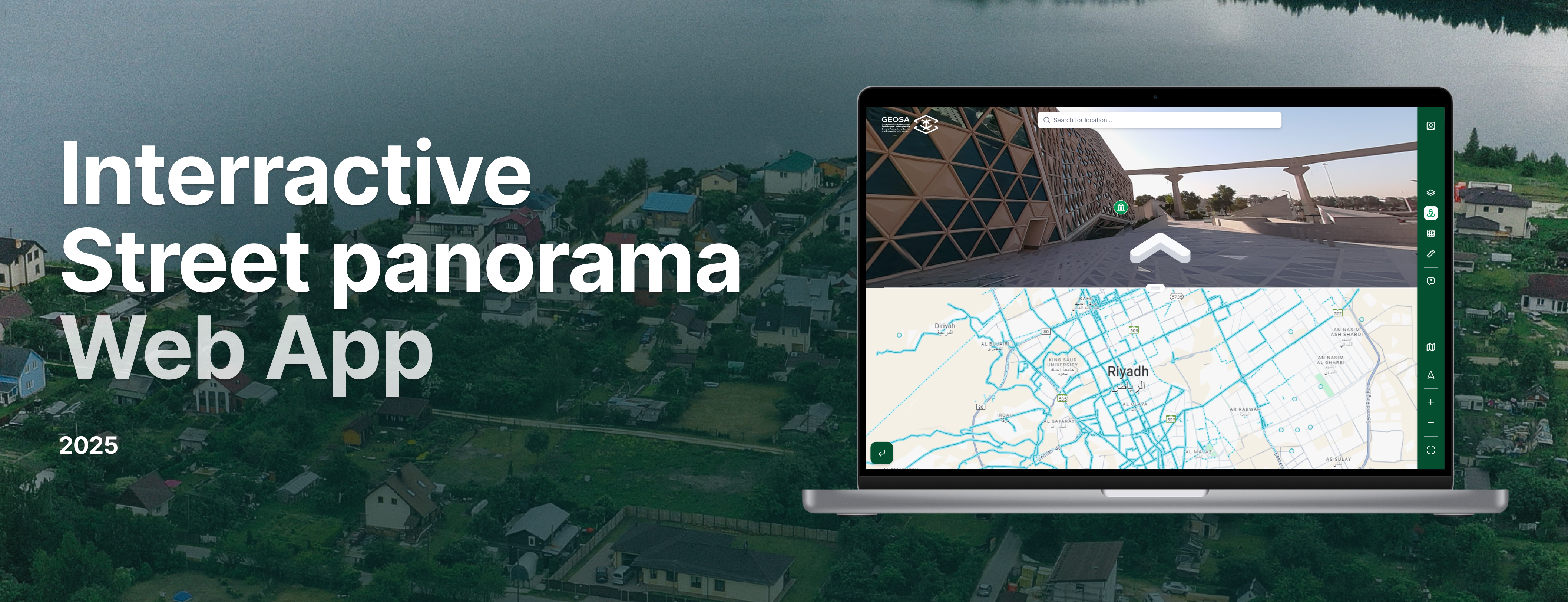
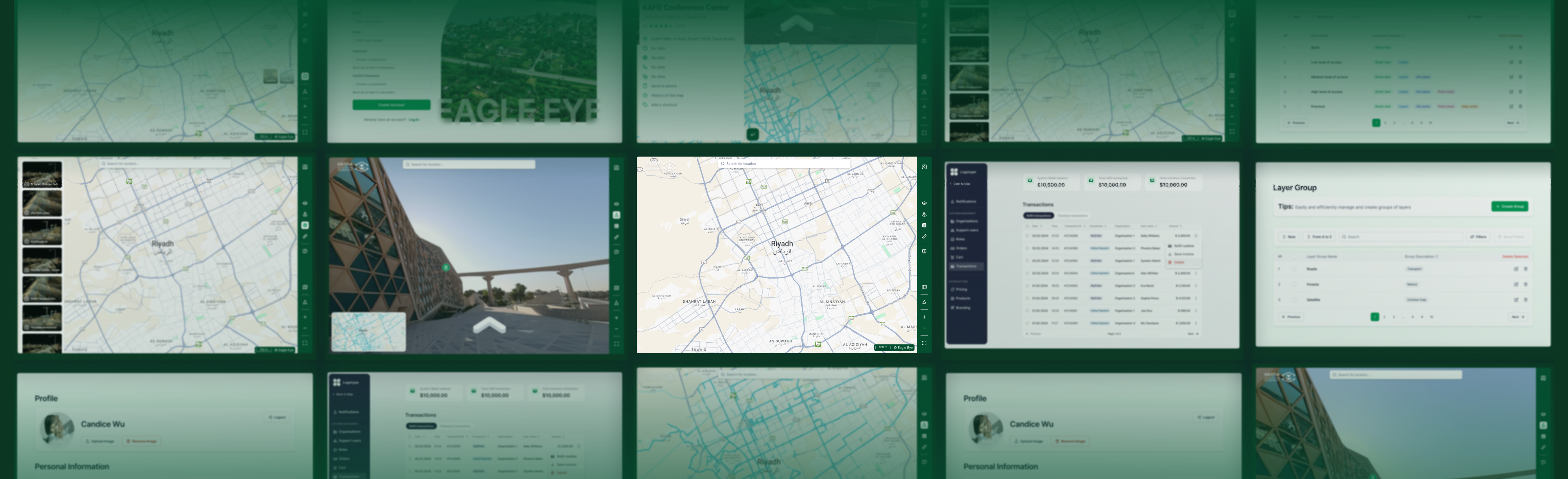
        SOFT – Development of an Interactive Street Panorama and GIS Layer Management Platform

        Development of an Interactive Street Panorama and GIS Layer Management Platform

        Looking for a similar project?

        Project Details

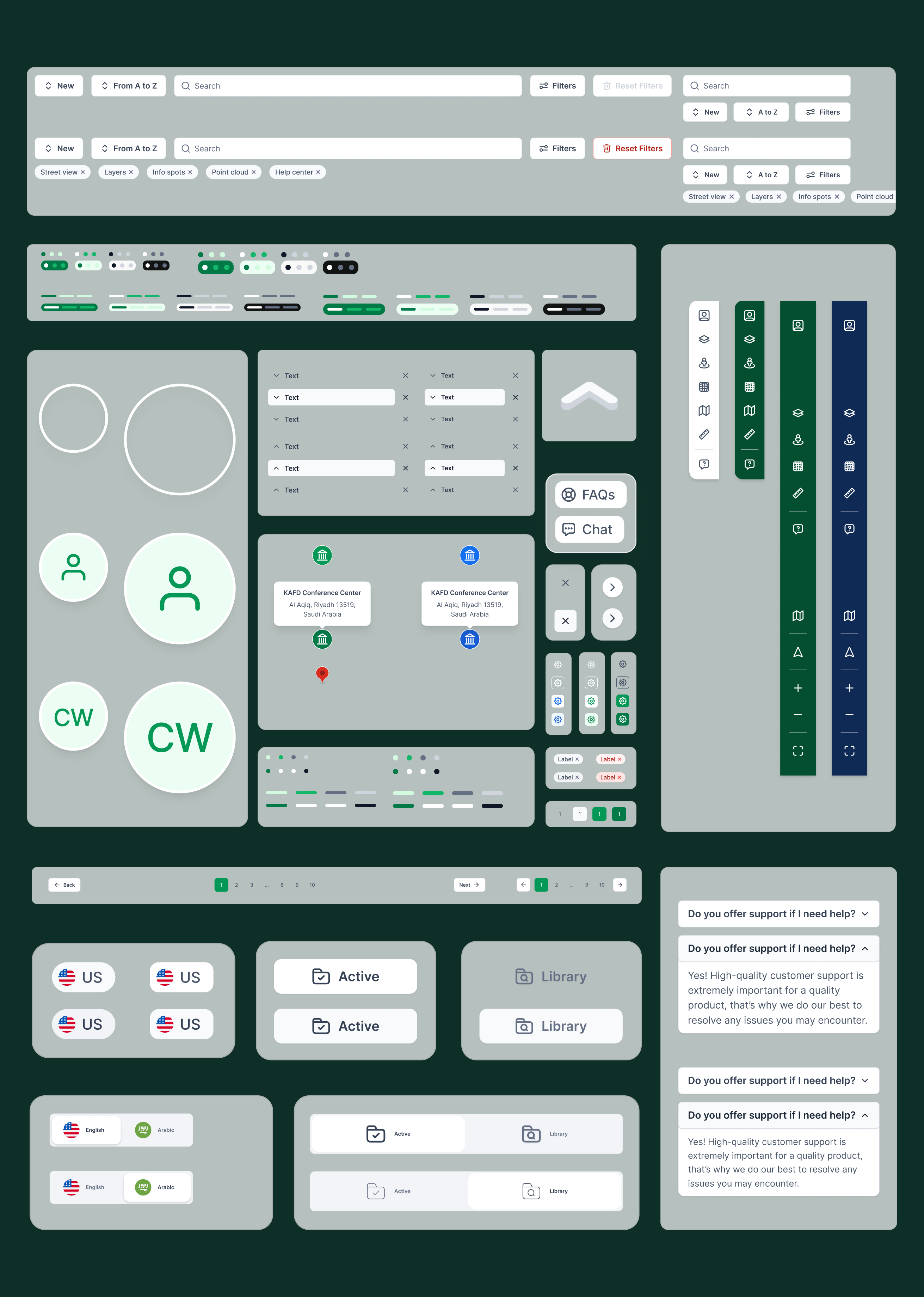
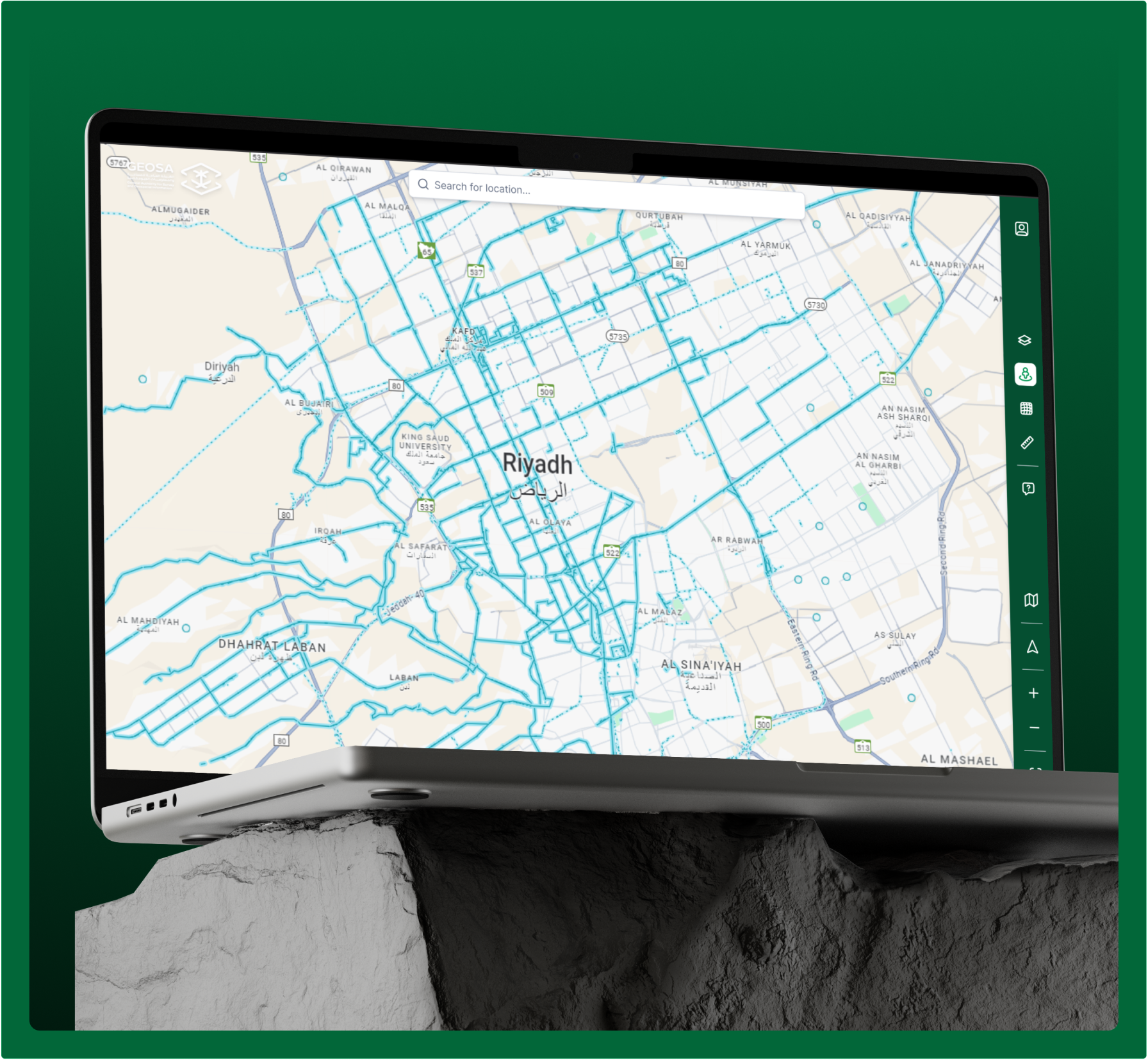
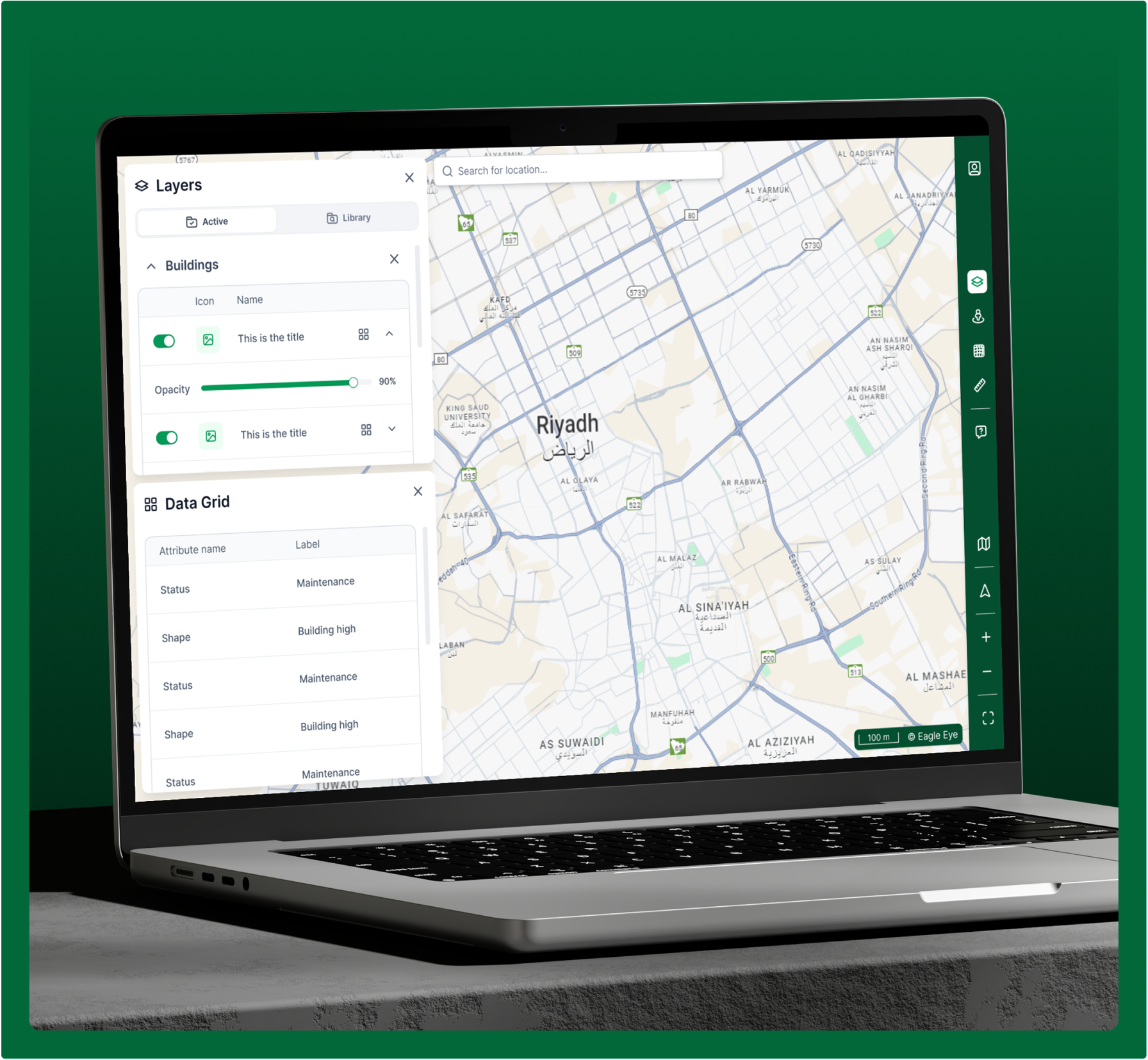
        The platform was developed for urban planning and development companies looking to provide users with interactive access to street-level views and customizable GIS data. The solution offers a virtual navigation experience where users can explore various locations through street panoramas. Additionally, it provides the ability to add, configure, and style multiple layers of geographic information, which can be overlaid on base maps for enriched visual and spatial analysis. This feature is particularly useful for professionals in urban planning, tourism, and logistics.

        Client: Urban Planning and Development Company

        Sector: Information Technology

        Sub Sector: Geographic Information Systems (GIS), Virtual Navigation

        Services:

        Solution:

        Creation of an online platform that offers users the ability to view and navigate through horizontal panoramic street-level images. The platform also allows users to configure and style layers of geographic information and overlay them on base maps for customized visual experiences.

        Location: Global (Remote access for users worldwide)

        People:

        The team included GIS specialists, software engineers, and a project manager who oversaw the platform’s development and integration of the panoramic image navigation. The UI/UX team designed an intuitive interface to simplify the complex layering of geographic data, while the development team focused on seamless integration with mapping technologies.

        Technology and Software:

        • WebGL for real-time panoramic image rendering
        • GIS technologies (ArcGIS, QGIS)
        • Database: SQLClient
        • Cloud services: AWS
        • Front-end: Angular
        • Back-end: .NET

        Process & Challenges

        Process:

        1. Initial Consultation: Understanding client needs and identifying the required features, including panoramic navigation and multi-layer GIS integration.
        2. Platform Design: Designing a user-friendly interface that would allow users to easily navigate panoramic images and customize geographic layers.
        3. Development: 
        • Integration of panoramic image technology to allow users to view 360° images along streets.
        • Managing and overlaying geographic information layers.
        • Backend system built for performance and scalability.
        1. Testing and Optimization: Rigorous testing of the platform’s performance, especially the real-time overlay of multiple GIS layers, and ensuring smooth transitions between panoramic images.

        Challenges:

        • Real-time Rendering of Panoramic Images: Ensuring that users can smoothly transition between street-level images without delay.
        • GIS Layer Customization: Allowing users to style and overlay geographic layers in real-time required careful handling of data and computational resources.
        • Scalability: The platform had to be designed to accommodate large numbers of users simultaneously, ensuring high performance across diverse geographic regions.

        Result

        The platform provided users with a seamless experience for navigating street panoramas and customizing geographic data layers. It enabled urban planners, researchers, and the general public to visualize real-world locations while also analyzing geographic data intuitively and engagingly. The solution has been widely adopted by professionals in urban development, tourism, and transportation, leading to enhanced planning and decision-making processes.

        Our Team

        Ievgen Lavrishko
        CEO & Owner
        Khrystyna Bochko
        HR Generalist
        Alevtyna Kostianchuk
        Senior Project Manager
        Andriiana Pavlyshyn
        Head of Business Development
        Roman Nahaiovskyi
        Project Manager
        Maria Kizim
        Lead Generation Specialist
        Ivanna Soltys
        Tender Manager

        Navigating Our Impressive SOFT Portfolio

        • Tracking system for public transport

          The system is designed to comprehensively address the issues of public passenger transport
        • Software for bus forecasting tables

          Develop software for public transport which display on tables arrival information about bus, tram and trolleybus.
        • Software development for a weather forecast program

          Software development for a weather forecast program
        • Oil and gas software products

          Software Development for the energy industry to control and track of logistics, drilling, mining.
        • Development of a Satellite Images Sales Platform 

          A portal for the sale of satellite images

        Working on the Project:
        A Step-by-Step Journey to Success

        01

        PREPARATION

        You give us a pilot project – set us a task, provide samples, templates, instructions.
        02

        PILOT PROJECT

        We carry out this pilot project
        for FREE, according to all your
        instructions.
        03

        AGREEMENT

        You evaluate our work, we agree on the cost of further work.
        04

        LET’S STARTED!

        We sign a cooperation agreement and NDA, after which our team gets to work.

        Have a similar project?

        Contact us, we’ll help with its implementation.

          United Kingdom

          Devonshire str., 41, Ground Floor, London W1G 7AJ, UK

          Estonia

          Harju maakond, Tallinn, Kesklinna linnaosa, Kaupmehe tn 7-120, 10114, Estonia

          Ukraine

          Ukraine, Lviv, Sadova street, 2a/1
          +380672088520 Ievgen Lavrishko
info@gis-point.com
          GIS – Fulfillment of government orders for the creation and updating of databases

          Web Platform for Digital Soil Mapping and Analysis

          Looking for a similar project?

          Project Details

          The client needed a tool to centralize and visualize soil information gathered from research sites, remote sensing, and predictive soil models. The challenge was to display soil data not just by location, but also by depth layers (e.g., 0–5 cm, 5–15 cm), with support for interactive querying and downloadable data outputs.


          We built a responsive, map-driven web app featuring a hexagon grid overlay, where each hex represents a geographic unit enriched with soil properties such as pH, organic carbon, texture, and moisture. Users can select a hex and a depth layer to explore corresponding charts, visualize soil property distributions, and compare layers over time.


          A comprehensive admin panel enables backend management of soil datasets, metadata, and UI content. The system enables rapid updates to map layers and dataset models.

          Client: Agricultural Research and Development Organization

          Sector: Precision Agriculture

          Sub Sector: Digital Soil Mapping and Environmental Monitoring

          Services:

          • Custom GIS web application development
          • Interactive map visualization
          • Depth-based soil data modeling
          • Admin panel and data management
          • Integration with global soil databases

          Solution:
          SoilHub is a web-based system designed to support the agricultural industry in visualizing, analyzing, and managing digital soil data. It offers users a depth-sensitive, hexagon-based mapping experience, with soil property graphs, search tools, and robust data management features.

          Location: Saudi Arabia

          People:
          The team comprised software developers, remote sensing specialists, and cloud engineers. The project manager led the agile development cycle, ensuring client requirements were met through iterative delivery. The backend team used .NET Core and the ABP Framework to handle data processing and user management, while the frontend team delivered an interactive experience using Angular. Our DevOps specialists ensured cloud infrastructure scalability and performance.

          Technology and Software:

          • Database: PostgreSQL;
          • Cloud services: AWS (EC2, S3);
          • Front-end: Angular;
          • Back-end: .NET Core with ABP Framework;
          • Elasticsearch.

          Process & Challenges

          Process:
          The process began with the detailed vectorization of existing raster data, including topographic maps and orthophotography. The team meticulously processed geodetic and land documentation, extracting accurate coordinates and delineations of land plots. This data was then used to construct comprehensive attribute databases, ensuring all necessary details were captured.
          The team created specific databases for various types of infrastructure. These included databases for underground and above-ground engineering networks such as water supply systems, power grids, gas lines, and sewage systems. Additionally, a topographic objects database was created to map roads, sidewalks, embankments, contour lines, and other relevant features. Another database was dedicated to buildings, capturing detailed information on their locations, dimensions, and attributes.
          Topological checks were performed to validate the integrity and accuracy of the data. This included verifying the connectivity and continuity of the mapped features, which is crucial for accurate representation of municipal utility networks. The team also incorporated extensive metadata and attribute information, linking each mapped feature with relevant data to enhance the utility and usability of the database.
          Additionally, the team ensured that the databases adhered to legislative requirements and industry standards, conducting thorough quality assurance processes. This involved cross-referencing the newly created data with existing records and maps to ensure consistency and accuracy.

          Challenges:
          Ensuring the accuracy and compliance of the electronic map with legislative requirements while managing a large volume of data and maintaining high precision during vectorization and data processing. The work involved handling incoming data ranging from the 1900s to the present day, requiring detailed and sequential analysis. The entire project was executed in specialized software and conducted in Polish, further adding to the complexity. The vast amounts of data demanded careful management and rigorous quality control to maintain the integrity of the final product.

          Result

          The resulting data is utilized on geospatial portals and other platforms for various purposes, including city planning and infrastructure management. The project resulted in comprehensive and up-to-date electronic maps that meet all legislative requirements.

          Our Team

          Ievgen Lavrishko
          CEO & Owner
          Khrystyna Bochko
          HR Generalist
          Alevtyna Kostianchuk
          Senior Project Manager
          Andriiana Pavlyshyn
          Head of Business Development
          Roman Nahaiovskyi
          Project Manager
          Maria Kizim
          Lead Generation Specialist
          Ivanna Soltys
          Tender Manager

          Navigating Our Impressive GIS Portfolio

          • Automatic tree recognition from orthophotos

            Location:

            Germany

            Automatic Tree Recognition with ArcGIS Pro is a project that aims to develop and implement an algorithm for automatic recognition of tree species based on remote sensing data.
          • Digitizing utility service connections

            Location:

            Canada

            The project encompasses the digitization of utility service connections, specifically for water, sewer, and storm services, spanning across 12,706 properties (parcels) within the City.
          • Geospatial Analysis and Image Processing

            Location:

            Poland

            Editing the automatically generated database of motorways, bridges and roads.
          • Precision 2D Vector Map Creating at 1500 Scale

            Location:

            Latvia

            Precision 2D Vector Map Creating at 1500 Scale
          • Processing of cadastral plots

            Location:

            Ukraine

            Our GIS specialists performed a complete data conversion, meeting all the client’s requirements and ensuring high quality of information processing.

          Working on the Project:
          A Step-by-Step Journey to Success

          01

          PREPARATION

          You give us a pilot project – set us a
          task, provide samples, templates,
          instructions.
          02

          PILOT PROJECT

          We carry out this pilot project
          for FREE, according to all your
          instructions.
          03

          AGREEMENT

          You evaluate our work, we agree on
          the cost of further work.
          04

          LET’S STARTED!

          We sign a cooperation agreement and
          NDA, after which our team gets to
          work.

          Have a similar project?

          Contact us, we’ll help with its implementation.

            United Kingdom

            Devonshire str., 41, Ground Floor, London W1G 7AJ, UK

            Estonia

            Harju maakond, Tallinn, Kesklinna linnaosa, Kaupmehe tn 7-120, 10114, Estonia

            Ukraine

            Ukraine, Lviv, Sadova street, 2a/1
            +380672088520 Ievgen Lavrishko
info@gis-point.com
            LiDAR – Updating topography database and checking old vector data

            Web Platform for Digital Soil Mapping and Analysis

            Looking for a similar project?

            Project Details

            The client needed a tool to centralize and visualize soil information gathered from research sites, remote sensing, and predictive soil models. The challenge was to display soil data not just by location, but also by depth layers (e.g., 0–5 cm, 5–15 cm), with support for interactive querying and downloadable data outputs.


            We built a responsive, map-driven web app featuring a hexagon grid overlay, where each hex represents a geographic unit enriched with soil properties such as pH, organic carbon, texture, and moisture. Users can select a hex and a depth layer to explore corresponding charts, visualize soil property distributions, and compare layers over time.


            A comprehensive admin panel enables backend management of soil datasets, metadata, and UI content. The system enables rapid updates to map layers and dataset models.

            Client: Agricultural Research and Development Organization

            Sector: Precision Agriculture

            Sub Sector: Digital Soil Mapping and Environmental Monitoring

            Services:

            • Custom GIS web application development
            • Interactive map visualization
            • Depth-based soil data modeling
            • Admin panel and data management
            • Integration with global soil databases

            Solution:
            SoilHub is a web-based system designed to support the agricultural industry in visualizing, analyzing, and managing digital soil data. It offers users a depth-sensitive, hexagon-based mapping experience, with soil property graphs, search tools, and robust data management features.

            Location: Saudi Arabia

            People:
            The team comprised software developers, remote sensing specialists, and cloud engineers. The project manager led the agile development cycle, ensuring client requirements were met through iterative delivery. The backend team used .NET Core and the ABP Framework to handle data processing and user management, while the frontend team delivered an interactive experience using Angular. Our DevOps specialists ensured cloud infrastructure scalability and performance.

            Technology and Software:

            • Database: PostgreSQL;
            • Cloud services: AWS (EC2, S3);
            • Front-end: Angular;
            • Back-end: .NET Core with ABP Framework;
            • Elasticsearch.

            Have a similar project?

            Contact us, we’ll help with its implementation.

              United Kingdom

              Devonshire str., 41, Ground Floor, London W1G 7AJ, UK

              Estonia

              Harju maakond, Tallinn, Kesklinna linnaosa, Kaupmehe tn 7-120, 10114, Estonia

              Ukraine

              Ukraine, Lviv, Sadova street, 2a/1
              +380672088520 Ievgen Lavrishko
info@gis-point.com
              GIS – Processing of cadastral plots

              Web Platform for Digital Soil Mapping and Analysis

              Looking for a similar project?

              Project Details

              The client needed a tool to centralize and visualize soil information gathered from research sites, remote sensing, and predictive soil models. The challenge was to display soil data not just by location, but also by depth layers (e.g., 0–5 cm, 5–15 cm), with support for interactive querying and downloadable data outputs.


              We built a responsive, map-driven web app featuring a hexagon grid overlay, where each hex represents a geographic unit enriched with soil properties such as pH, organic carbon, texture, and moisture. Users can select a hex and a depth layer to explore corresponding charts, visualize soil property distributions, and compare layers over time.


              A comprehensive admin panel enables backend management of soil datasets, metadata, and UI content. The system enables rapid updates to map layers and dataset models.

              Client: Agricultural Research and Development Organization

              Sector: Precision Agriculture

              Sub Sector: Digital Soil Mapping and Environmental Monitoring

              Services:

              • Custom GIS web application development
              • Interactive map visualization
              • Depth-based soil data modeling
              • Admin panel and data management
              • Integration with global soil databases

              Solution:
              SoilHub is a web-based system designed to support the agricultural industry in visualizing, analyzing, and managing digital soil data. It offers users a depth-sensitive, hexagon-based mapping experience, with soil property graphs, search tools, and robust data management features.

              Location: Saudi Arabia

              People:
              The team comprised software developers, remote sensing specialists, and cloud engineers. The project manager led the agile development cycle, ensuring client requirements were met through iterative delivery. The backend team used .NET Core and the ABP Framework to handle data processing and user management, while the frontend team delivered an interactive experience using Angular. Our DevOps specialists ensured cloud infrastructure scalability and performance.

              Technology and Software:

              • Database: PostgreSQL;
              • Cloud services: AWS (EC2, S3);
              • Front-end: Angular;
              • Back-end: .NET Core with ABP Framework;
              • Elasticsearch.

              Process & Challenges

              Process:
              The data was carefully collected from state registers to ensure its relevance and accuracy. The data was processed in QGIS, with special attention to maintaining topological integrity and avoiding overlaps or cuts within the plots.

              Challenges:
              During the implementation of this project, GisPoint and our specialists faced a number of serious challenges. 

              Here are the main challenges we faced:

              Ensure the conversion of land plots without topological errors such as cuts or overlaps.
              Accurate inclusion of all specified attributes for each land plot.

              Result

              The project was successfully completed on time, with all 115,000 land plots converted to Shapefile format with all the necessary attributes. The quality of the work met the highest requirements, satisfying the client’s needs.

              Our Team

              Ievgen Lavrishko
              CEO & Owner
              Khrystyna Bochko
              HR Generalist
              Alevtyna Kostianchuk
              Senior Project Manager
              Andriiana Pavlyshyn
              Head of Business Development
              Roman Nahaiovskyi
              Project Manager
              Maria Kizim
              Lead Generation Specialist
              Ivanna Soltys
              Tender Manager

              Navigating Our Impressive GIS Portfolio

              • Geospatial Analysis and Image Processing

                Location:

                Poland

                Editing the automatically generated database of motorways, bridges and roads.
              • Precision 2D Vector Map Creating at 1500 Scale

                Location:

                Latvia

                Precision 2D Vector Map Creating at 1500 Scale
              • Topological Verification and Correction of Seafloor Maps

                Topological Verification and Correction of Seafloor Maps
              • Updating the BDOT topographic database at a scale of 1:10000

                Location:

                Poland

                Using an orthophotomap, we check the relevance of the existing topographic objects in the database, as well as create new ones (which are not in the existing database).
              • Updating the existing database of residential buildings

                Location:

                Poland

                The project involved validating the current entries in the database for accuracy and completeness, identifying and adding new buildings that were absent from the existing database, and rectifying any geometric discrepancies in building representations.

              Working on the Project:
              A Step-by-Step Journey to Success

              01

              PREPARATION

              You give us a pilot project – set us a
              task, provide samples, templates,
              instructions.
              02

              PILOT PROJECT

              We carry out this pilot project
              for FREE, according to all your
              instructions.
              03

              AGREEMENT

              You evaluate our work, we agree on
              the cost of further work.
              04

              LET’S STARTED!

              We sign a cooperation agreement and
              NDA, after which our team gets to
              work.

              Have a similar project?

              Contact us, we’ll help with its implementation.

                United Kingdom

                Devonshire str., 41, Ground Floor, London W1G 7AJ, UK

                Estonia

                Harju maakond, Tallinn, Kesklinna linnaosa, Kaupmehe tn 7-120, 10114, Estonia

                Ukraine

                Ukraine, Lviv, Sadova street, 2a/1
                +380672088520 Ievgen Lavrishko
info@gis-point.com
                GIS – Digitizing utility service connections

                Web Platform for Digital Soil Mapping and Analysis

                Looking for a similar project?

                Project Details

                The client needed a tool to centralize and visualize soil information gathered from research sites, remote sensing, and predictive soil models. The challenge was to display soil data not just by location, but also by depth layers (e.g., 0–5 cm, 5–15 cm), with support for interactive querying and downloadable data outputs.


                We built a responsive, map-driven web app featuring a hexagon grid overlay, where each hex represents a geographic unit enriched with soil properties such as pH, organic carbon, texture, and moisture. Users can select a hex and a depth layer to explore corresponding charts, visualize soil property distributions, and compare layers over time.


                A comprehensive admin panel enables backend management of soil datasets, metadata, and UI content. The system enables rapid updates to map layers and dataset models.

                Client: Agricultural Research and Development Organization

                Sector: Precision Agriculture

                Sub Sector: Digital Soil Mapping and Environmental Monitoring

                Services:

                • Custom GIS web application development
                • Interactive map visualization
                • Depth-based soil data modeling
                • Admin panel and data management
                • Integration with global soil databases

                Solution:
                SoilHub is a web-based system designed to support the agricultural industry in visualizing, analyzing, and managing digital soil data. It offers users a depth-sensitive, hexagon-based mapping experience, with soil property graphs, search tools, and robust data management features.

                Location: Saudi Arabia

                People:
                The team comprised software developers, remote sensing specialists, and cloud engineers. The project manager led the agile development cycle, ensuring client requirements were met through iterative delivery. The backend team used .NET Core and the ABP Framework to handle data processing and user management, while the frontend team delivered an interactive experience using Angular. Our DevOps specialists ensured cloud infrastructure scalability and performance.

                Technology and Software:

                • Database: PostgreSQL;
                • Cloud services: AWS (EC2, S3);
                • Front-end: Angular;
                • Back-end: .NET Core with ABP Framework;
                • Elasticsearch.

                Process & Challenges

                Process:
                The project involved several technical steps to transition from analog to digital data and ensure the accuracy of the utility network database:

                • Data Preparation and Digitization: Augmented the existing ArcGIS geodatabase by linking utility service connections (water, sewer, storm) to residential parcels. Integrated scanned engineering documentation and systematically transferred historical paper records into digital formats, mapping them to the appropriate parcels within the geodatabase.
                • Attribute Enrichment: Updated the geodatabase with detailed attributes for each utility connection, including pipe depth, diameter, and length. This required careful extraction and input of data from engineering documents.
                • Topological Validation: Performed comprehensive topological checks to ensure data integrity and accuracy, verifying spatial relationships and connections within the utility network to identify and correct inconsistencies.
                • Quality Assurance: Implemented rigorous quality control measures, including validation of data accuracy and completeness through systematic checks. All topological and attribute data was verified to meet project standards.

                The process resulted in a high-quality digital utility network with accurate attributes and validated spatial relationships.

                Challenges:
                The project encountered several challenges, including the integration of historical data from paper records spanning from the 1900s to the present. This data presented difficulties due to varying units of measurement and technical details. Ensuring the accuracy and completeness of utility connections was complex given the large volume of data involved. Additionally, managing and processing extensive datasets required meticulous attention to maintain the integrity of the utility network information.

                Result

                A fully digitized utility network database for the city, including all necessary topological checks. The project successfully transferred historical data to the GIS system, creating a robust digital record-keeping system for future utility management and planning.

                Our Team

                Ievgen Lavrishko
                CEO & Owner
                Khrystyna Bochko
                HR Generalist
                Alevtyna Kostianchuk
                Senior Project Manager
                Andriiana Pavlyshyn
                Head of Business Development
                Roman Nahaiovskyi
                Project Manager
                Maria Kizim
                Lead Generation Specialist
                Ivanna Soltys
                Tender Manager

                Navigating Our Impressive GIS Portfolio

                • Automatic tree recognition from orthophotos

                  Location:

                  Germany

                  Automatic Tree Recognition with ArcGIS Pro is a project that aims to develop and implement an algorithm for automatic recognition of tree species based on remote sensing data.
                • Digitizing utility service connections

                  Location:

                  Canada

                  The project encompasses the digitization of utility service connections, specifically for water, sewer, and storm services, spanning across 12,706 properties (parcels) within the City.
                • Fulfillment of government orders to create and update databases

                  Location:

                  Poland

                  The databases are created and updated by vectorizing existing raster data (topographic maps), orthophotomaps and processing geodetic files and land documentation (by coordinates and sketches).
                • Geospatial Analysis and Image Processing

                  Location:

                  Poland

                  Editing the automatically generated database of motorways, bridges and roads.
                • Precision 2D Vector Map Creating at 1500 Scale

                  Location:

                  Latvia

                  Precision 2D Vector Map Creating at 1500 Scale

                Working on the Project:
                A Step-by-Step Journey to Success

                01

                PREPARATION

                You give us a pilot project – set us a
                task, provide samples, templates,
                instructions.
                02

                PILOT PROJECT

                We carry out this pilot project
                for FREE, according to all your
                instructions.
                03

                AGREEMENT

                You evaluate our work, we agree on
                the cost of further work.
                04

                LET’S STARTED!

                We sign a cooperation agreement and
                NDA, after which our team gets to
                work.

                Have a similar project?

                Contact us, we’ll help with its implementation.

                  United Kingdom

                  Devonshire str., 41, Ground Floor, London W1G 7AJ, UK

                  Estonia

                  Harju maakond, Tallinn, Kesklinna linnaosa, Kaupmehe tn 7-120, 10114, Estonia

                  Ukraine

                  Ukraine, Lviv, Sadova street, 2a/1
                  +380672088520 Ievgen Lavrishko
info@gis-point.com
                  GIS – Automatic tree recognition from orthophotos

                  Web Platform for Digital Soil Mapping and Analysis

                  Looking for a similar project?

                  Project Details

                  The client needed a tool to centralize and visualize soil information gathered from research sites, remote sensing, and predictive soil models. The challenge was to display soil data not just by location, but also by depth layers (e.g., 0–5 cm, 5–15 cm), with support for interactive querying and downloadable data outputs.


                  We built a responsive, map-driven web app featuring a hexagon grid overlay, where each hex represents a geographic unit enriched with soil properties such as pH, organic carbon, texture, and moisture. Users can select a hex and a depth layer to explore corresponding charts, visualize soil property distributions, and compare layers over time.


                  A comprehensive admin panel enables backend management of soil datasets, metadata, and UI content. The system enables rapid updates to map layers and dataset models.

                  Client: Agricultural Research and Development Organization

                  Sector: Precision Agriculture

                  Sub Sector: Digital Soil Mapping and Environmental Monitoring

                  Services:

                  • Custom GIS web application development
                  • Interactive map visualization
                  • Depth-based soil data modeling
                  • Admin panel and data management
                  • Integration with global soil databases

                  Solution:
                  SoilHub is a web-based system designed to support the agricultural industry in visualizing, analyzing, and managing digital soil data. It offers users a depth-sensitive, hexagon-based mapping experience, with soil property graphs, search tools, and robust data management features.

                  Location: Saudi Arabia

                  People:
                  The team comprised software developers, remote sensing specialists, and cloud engineers. The project manager led the agile development cycle, ensuring client requirements were met through iterative delivery. The backend team used .NET Core and the ABP Framework to handle data processing and user management, while the frontend team delivered an interactive experience using Angular. Our DevOps specialists ensured cloud infrastructure scalability and performance.

                  Technology and Software:

                  • Database: PostgreSQL;
                  • Cloud services: AWS (EC2, S3);
                  • Front-end: Angular;
                  • Back-end: .NET Core with ABP Framework;
                  • Elasticsearch.

                  Process & Challenges

                  Process:
                  The project was implemented using the integrated ArcGIS Pro platform, which ensured efficient data and computing management. The implementation process included the following stages:

                  1. Development of the classification algorithm: Using ArcGIS Pro software and machine learning tools, an algorithm was developed to automatically classify image pixels and locate each tree.
                  2. Model testing and validation: The accuracy of the developed model was tested on an independent sample of data compared to manual counting and postal surveys.
                  3. Map generation: Based on the classification results, detailed digital maps of each tree location were created.

                  Challenges:
                  Automatically finding tree locations with ArcGIS Pro is a complex process that comes with a number of challenges. Here are some of the most common issues we’ve encountered:

                  Noise and artifacts: Shadows, clouds, atmospheric phenomena, as well as various types of noise can interfere with segmentation algorithms.

                  Spectral characteristics: The diversity of tree species, their condition (healthy, diseased, young, old), and weather conditions can lead to significant variations in spectral characteristics, making it difficult to classify them.

                  Computing resources: Processing large amounts of data and complex machine learning models required powerful hardware.

                  Training sample preparation: Creating a high-quality training set with accurate annotations was a labour-intensive process.

                  These challenges, as we know, are an integral part of such projects and required us to carefully analyze and find optimal solutions.

                  Result

                  The project resulted in a high accuracy of tree coordinates (90%), which allows us to obtain detailed information about their location in the forests. A significant amount of data (600 hectares) was processed and detailed tree distribution maps were created.

                  Our Team

                  Ievgen Lavrishko
                  CEO & Owner
                  Khrystyna Bochko
                  HR Generalist
                  Alevtyna Kostianchuk
                  Senior Project Manager
                  Andriiana Pavlyshyn
                  Head of Business Development
                  Roman Nahaiovskyi
                  Project Manager
                  Maria Kizim
                  Lead Generation Specialist
                  Ivanna Soltys
                  Tender Manager

                  Navigating Our Impressive GIS Portfolio

                  • Digitizing utility service connections

                    Location:

                    Canada

                    The project encompasses the digitization of utility service connections, specifically for water, sewer, and storm services, spanning across 12,706 properties (parcels) within the City.
                  • Fulfillment of government orders to create and update databases

                    Location:

                    Poland

                    The databases are created and updated by vectorizing existing raster data (topographic maps), orthophotomaps and processing geodetic files and land documentation (by coordinates and sketches).
                  • Geospatial Analysis and Image Processing

                    Location:

                    Poland

                    Editing the automatically generated database of motorways, bridges and roads.
                  • Precision 2D Vector Map Creating at 1500 Scale

                    Location:

                    Latvia

                    Precision 2D Vector Map Creating at 1500 Scale
                  • Vectorization of roads and road signs

                    Location:

                    Czech Republic, Prostejov

                    To create a 2D vector map in the city of Prostejov that includes road infrastructure and road signs.

                  Working on the Project:
                  A Step-by-Step Journey to Success

                  01

                  PREPARATION

                  You give us a pilot project – set us a
                  task, provide samples, templates,
                  instructions.
                  02

                  PILOT PROJECT

                  We carry out this pilot project
                  for FREE, according to all your
                  instructions.
                  03

                  AGREEMENT

                  You evaluate our work, we agree on
                  the cost of further work.
                  04

                  LET’S STARTED!

                  We sign a cooperation agreement and
                  NDA, after which our team gets to
                  work.

                  Have a similar project?

                  Contact us, we’ll help with its implementation.

                    United Kingdom

                    Devonshire str., 41, Ground Floor, London W1G 7AJ, UK

                    Estonia

                    Harju maakond, Tallinn, Kesklinna linnaosa, Kaupmehe tn 7-120, 10114, Estonia

                    Ukraine

                    Ukraine, Lviv, Sadova street, 2a/1
                    +380672088520 Ievgen Lavrishko
info@gis-point.com

                    LiDAR – Creation of a digital spatial 3D/2D model of the Tunnel

                    Web Platform for Digital Soil Mapping and Analysis

                    Looking for a similar project?

                    Project Details

                    The project involved the creation of a digital spatial 3D model of a 25-meter tunnel, along with 2D cross-sections and longitudinal sections. The data was processed using Bentley MicroStation and Terra solid, resulting in a highly accurate model suitable for a range of applications including design, construction, and inspections..

                    Client: A geodetic and engineering company specializing in surveying, property management, and geospatial solutions.

                    Sector: LIDAR Data Processing

                    Sub Sector:

                    • 3D/2D Modeling
                    • Infrastructure

                    Services:

                    • LiDAR Data Processing
                    • 3D Model Creation
                    • 2D Cross-Sections and Longitudinal Sections
                    • Infrastructure Analysis

                    Solution:

                    • Creation of a digital 3D model of a tunnel based on laser scanning data
                    • Generation of detailed 2D cross-sections and longitudinal sections of the tunnel
                    • High-precision modeling to facilitate future use in design, construction, repair, and inspection
                    • Accurate representation of tunnel geometry for detailed structural analysis

                    Location: Czech Republic

                    Technology and Software:

                    • Bentley MicroStation: Used for 3D modeling and generating 2D cross-sections
                    • Terra solid: Employed for LIDAR data processing and model refinement

                    People:
                    The GisPoint team, with expertise in LIDAR data processing and modeling, delivered this project. Their skills ensured the creation of a precise digital model that meets the needs of structural analysis and future maintenance work.

                    Process & Challenges

                    Process:

                    Data Acquisition: Laser scanning data was collected to capture the tunnel’s geometry.

                    3D Model Creation: A detailed 3D model of the tunnel was generated using Bentley MicroStation – Terra solid.

                    2D Section Creation: Cross-sections and longitudinal sections were produced for a comprehensive structural overview.

                    Accuracy Checks: The models were reviewed to ensure high precision and usability for various infrastructure applications.

                    Challenges:

                    Ensuring the 3D model captured the exact structure and geometry of the tunnel with high precision.

                    Processing detailed cross-sections that align with the real-world dimensions of the tunnel.

                    Managing large volumes of LIDAR data efficiently within the project timeline.

                    Project Details

                    The client needed a tool to centralize and visualize soil information gathered from research sites, remote sensing, and predictive soil models. The challenge was to display soil data not just by location, but also by depth layers (e.g., 0–5 cm, 5–15 cm), with support for interactive querying and downloadable data outputs.


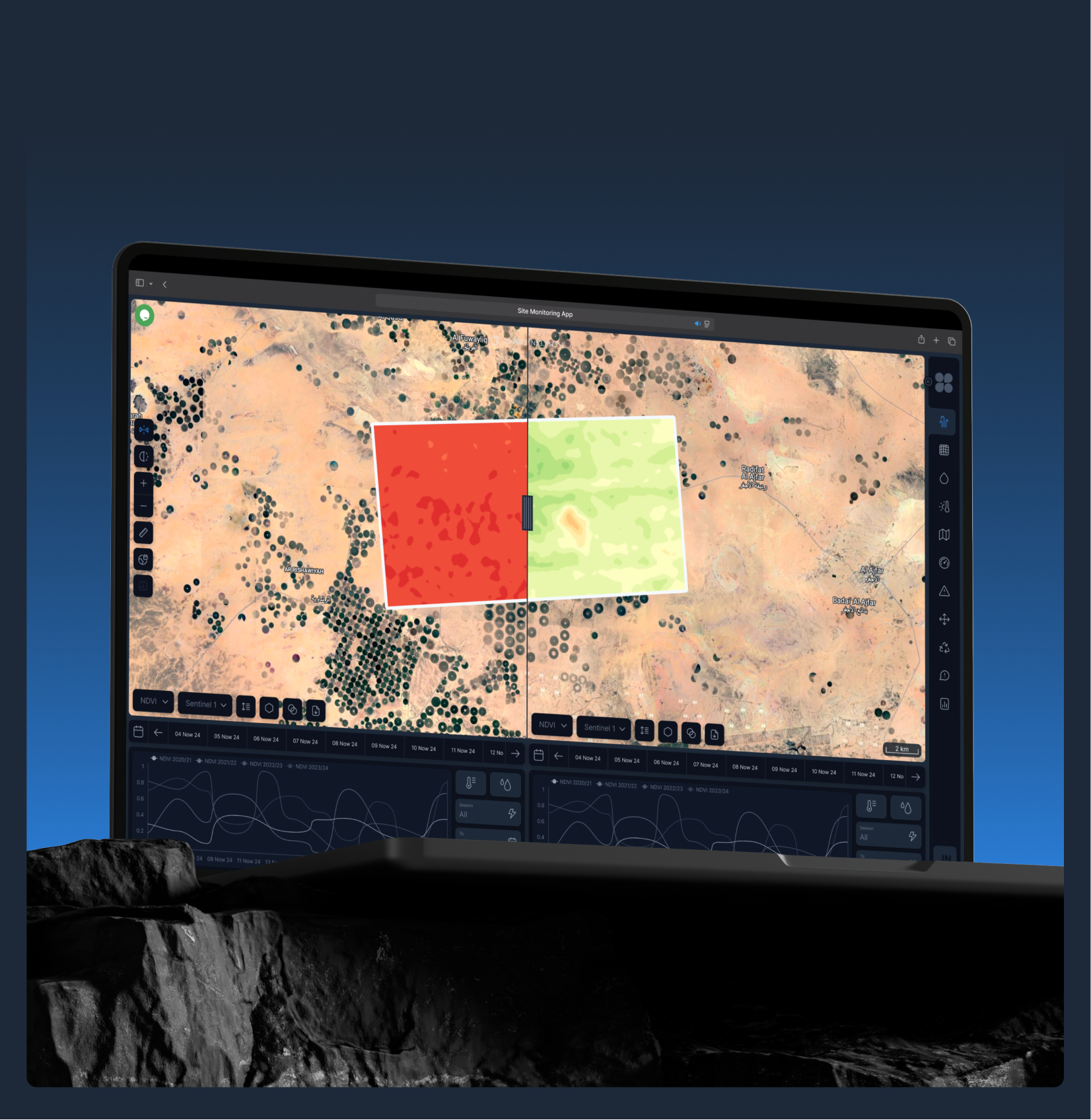
                    We built a responsive, map-driven web app featuring a hexagon grid overlay, where each hex represents a geographic unit enriched with soil properties such as pH, organic carbon, texture, and moisture. Users can select a hex and a depth layer to explore corresponding charts, visualize soil property distributions, and compare layers over time.


                    A comprehensive admin panel enables backend management of soil datasets, metadata, and UI content. The system enables rapid updates to map layers and dataset models.
                    Client: Agricultural Research and Development Organization

                    Sector: Precision Agriculture

                    Sub Sector: Digital Soil Mapping and Environmental Monitoring

                    Services:

                    • Custom GIS web application development
                    • Interactive map visualization
                    • Depth-based soil data modeling
                    • Admin panel and data management
                    • Integration with global soil databases

                    Solution:
                    SoilHub is a web-based system designed to support the agricultural industry in visualizing, analyzing, and managing digital soil data. It offers users a depth-sensitive, hexagon-based mapping experience, with soil property graphs, search tools, and robust data management features.

                    Location: Saudi Arabia

                    People:
                    The team comprised software developers, remote sensing specialists, and cloud engineers. The project manager led the agile development cycle, ensuring client requirements were met through iterative delivery. The backend team used .NET Core and the ABP Framework to handle data processing and user management, while the frontend team delivered an interactive experience using Angular. Our DevOps specialists ensured cloud infrastructure scalability and performance.

                    Technology and Software:

                    • Database: PostgreSQL;
                    • Cloud services: AWS (EC2, S3);
                    • Front-end: Angular;
                    • Back-end: .NET Core with ABP Framework;
                    • Elasticsearch.

                    Our Team

                    Ievgen Lavrishko
                    CEO & Owner
                    Khrystyna Bochko
                    HR Generalist
                    Alevtyna Kostianchuk
                    Senior Project Manager
                    Andriiana Pavlyshyn
                    Head of Business Development
                    Roman Nahaiovskyi
                    Project Manager
                    Maria Kizim
                    Lead Generation Specialist
                    Ivanna Soltys
                    Tender Manager

                    Navigating Our Impressive GIS Portfolio

                    • Classification of LiDAR point clouds for the city of Oslo

                      Location:

                      Norway

                      Within the scope of this task, data from a portion of Oslo city was processed, specifically LAS/LAZ files and vector data for buildings, utility poles, and power transmission lines (with a focus on this vector area).
                    • Classification of Lidar point clouds for the city of Oslo

                      Location:

                      Norway

                      We received data of a part of Oslo city, namely LAS/LAZ files and a vector of buildings, poles and power lines (these classes had to be processed within the vector).
                    • Create a digital spatial 3D map from mobile Lidar scanning data and panoramic images

                      Location:

                      Czech Republic

                      To create a digital 3D map from mobile lidar scanning data and panoramic imagery.
                    • Creating a digital spatial 3D model of a concrete support

                      Location:

                      Czech Republic

                      A digital spatial 3D model of a concrete support was created in Bentley MicroStation – Terra solid based on laser scanning.
                    • Creation and updating of topographics data and underground communications databases

                      Creation and updating of topographics data and underground communications databases on a scale of 1:500.

                    Working on the Project:
                    A Step-by-Step Journey to Success

                    01

                    PREPARATION

                    You give us a pilot project – set us a
                    task, provide samples, templates,
                    instructions.
                    02

                    PILOT PROJECT

                    We carry out this pilot project
                    for FREE, according to all your
                    instructions.
                    03

                    AGREEMENT

                    You evaluate our work, we agree on
                    the cost of further work.
                    04

                    LET’S STARTED!

                    We sign a cooperation agreement and
                    NDA, after which our team gets to
                    work.

                    Have a similar project?

                    Contact us, we’ll help with its implementation.

                      United Kingdom

                      Devonshire str., 41, Ground Floor, London W1G 7AJ, UK

                      Estonia

                      Harju maakond, Tallinn, Kesklinna linnaosa, Kaupmehe tn 7-120, 10114, Estonia

                      Ukraine

                      Ukraine, Lviv, Sadova street, 2a/1
                      +380672088520 Ievgen Lavrishko
info@gis-point.com